
Art
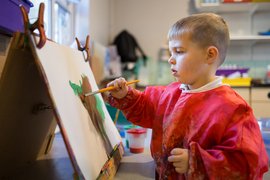
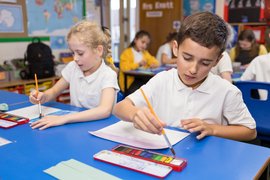
At South Wellfield First School, we believe that every child is an artist. Our ambitious Art Curriculum inspires children to explore, create and express themselves through exciting, hands-on experiences. The bespoke curriculum has been developed to meet the needs of our pupils as well as challenging them, inspiring them and tapping into how uniquely creative we all can be.
From their earliest mark-making experiences in EYFS to creating detailed observational drawings, sculptures and prints in Key Stage 2, children build their skills progressively year on year. They learn to use artistic vocabulary, techniques and manipulate materials with increasing independence, while exploring the key elements of art – line, shape, colour, texture, form, tone, pattern and space.
Our curriculum introduces children to a diverse range of artists, designers and makers from different cultures, places, time periods and artistic movements. By studying both classical and contemporary artists, pupils learn how art reflects the diverse world around us and how creativity can communicate ideas, emotions and stories. They learn to look closely at the world around them and beyond their own experiences, communicate their ideas visually and talk about their own work with pride.
We encourage children to experiment, take risks and develop resilience through the creative process. Every child is given opportunities to plan, refine and evaluate their work, culminating in meaningful final pieces that showcase their growing artistic skills and individuality. We are proud to celebrate creativity across our school and nurture a lifelong appreciation of the arts.
Our Art Lesson Structure
Our Art Curriculum
Our school uses a bespoke curriculum. The curriculum is skill-focused and broken down into the units of drawing, painting, printing, sculpture, collage and digital media. Each unit has its own set of skills which are built upon from the EYFS, with opportunities in every lesson to retrieve previous knowledge or skills and reduce cognitive overload. Children are encouraged to watch skills being modelled, explore and practise these techniques then apply them in their own unique way. We emphasise that all art is different and that our final products will not all look the same, but all will be valued and celebrated.
As part of every unit, pupils will explore work by a diverse range of artists and learn the skills needed to appraise their work. Different appraisal skills are taught in each year group, building on the ones from before. In the EYFS, pupils are taught to explore art by asking what they can ‘see, notice and wonder’. By Year 4, pupils will be able to discuss the mood and atmosphere evoked by the artist, identify elements of art and make comparisons between pieces of art.
Children’s work is not marked. Instead, verbal feedback is given throughout lessons, giving advice on how to improve and skills or techniques are continuously modelled by the teacher. There are frequent opportunities for self-evaluation and peer assessment, using the appraisal framework already woven into the curriculum.
"Every child is an Artist, the problem is staying an artist when you grow up." Picasso
Good Art and Design teaching happens in our school when:
- Lessons are inclusive, adaptive and of a high standard
- Curriculum content covers Theoretical Knowledge, Practical Knowledge (skills), Creativity (processes and outcomes) and Reflection (ongoing as it informs progress made and influences future actions)
- Self-expression in art is used to support children’s mental health and their wellbeing
- Pupils’ sketch books demonstrate continual progress in skills, creativity and variation in conjunction with clear objectives which reflect the National Curriculum aims, targets and subject content
| Well-nurtured |
At SWFS, Art:
|
| Well-rounded | Artistic projects give many children a sense of achievement and pride, focus, self-expression; they are a way of memorising pattern, of encouraging relaxation and communication and best of all, of learning a craft. All of these skills are transferable and makes all of us well-rounded, questioning, lateral-thinking adults and children. |
| Well-equipped | We equip children by developing motor, language and social skills, decision-making, risk taking and inventiveness; boost critical thinking teaching children to be more careful and thorough in how they observe the world; develop proficiency in drawing, painting, sculpture and other art, craft and design techniques. |
| Well-read | We are curating an Art Book Library and will be adding to this as more high-quality texts are discovered. These books will add value to the children’s practical Art and Design lessons by encouraging children to take, look and read as they please. They can pique their interest and are a great connection between Art and Literacy. It is a positive way for students to exercise choice. We currently have, amongst others, these amazing titles – The Noisy Paint Box, Hundertwasser’s House of Happy Spirits and Yves Klein Painted Everything Blue and Wasn’t Sorry. |
| Well-connected | Art is everywhere so we aim to connect students with their own culture as well as with the wider world, showing them how Art and Design shapes our history and contributes to the culture, creativity and wealth of our nation. Art is a world-making activity, transcending languages and cultures. We introduce children to artists that connect with and inspire people globally. There is a pressing need for artists and educators to confront the environmental crisis and promote a more environmentally responsible and ecologically literate culture. The Arts industry is one of the biggest employers in the world – we highlight this to the children when the opportunity presents itself, anywhere from fashion designers to architects, graphic artists to sculptors. |
To find out more about our Art Curriculum click on one of the tabs below.