

EYFS
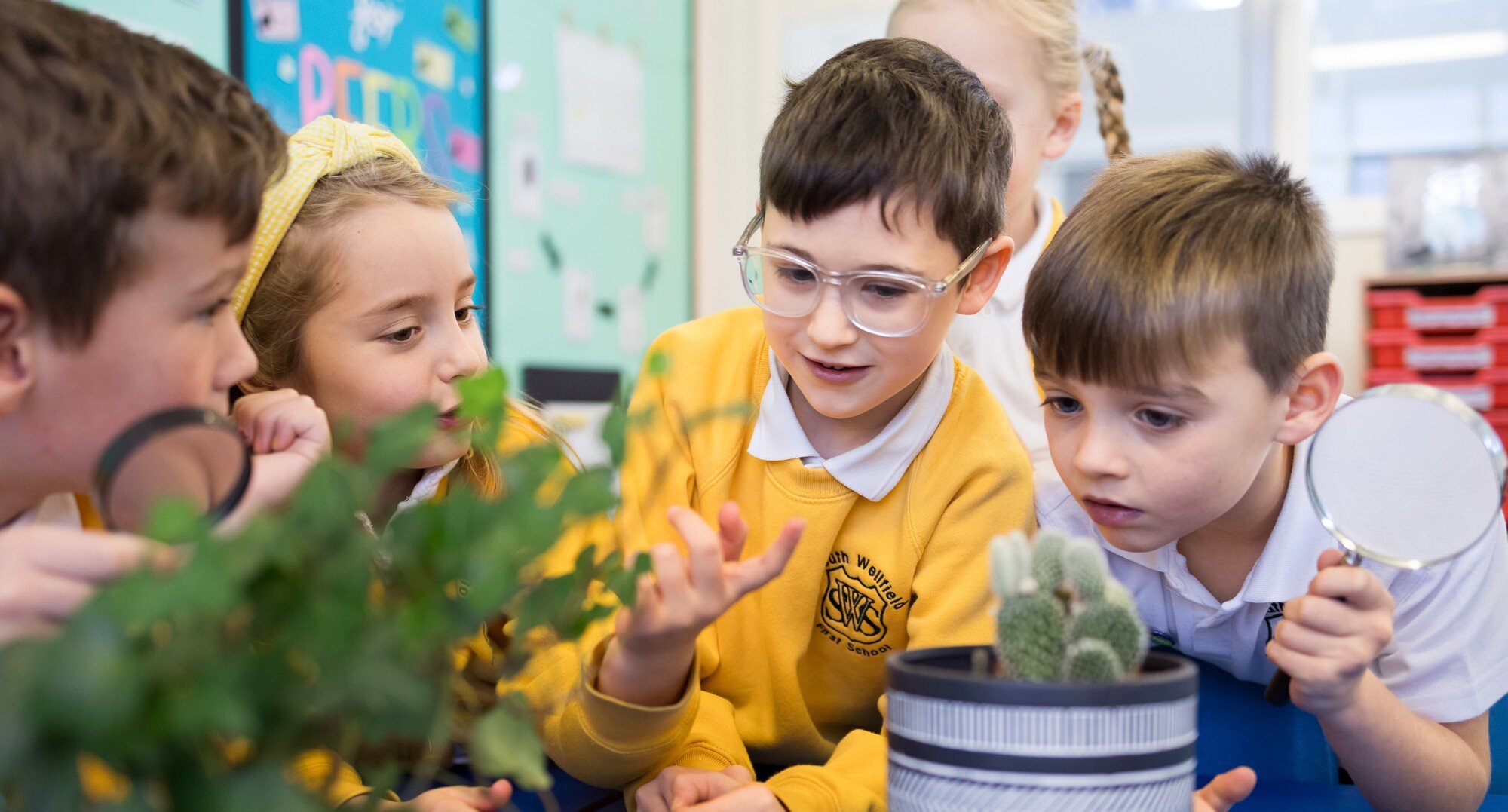
Our Early Years space has recently been through a huge renovation to create more Nursery space and a large open plan Reception space with easy access to the outdoors. We have also repurposed our outdoor space to not only have free flow access to the outdoor classroom, but we have also created a new dedicated space to physical development as well as and our brand new Forest School which Reception visits weekly and Nursery fortnightly. Please explore this page to find out more about Early Years.
We are incredibly proud of our new Early Years where children are at the heart of every thing we do. Early years is the foundation to all other learning in a child’s life, they will learn fundamental skills from becoming increasingly independent and managing themselves to developing the social skills required to build friendships which can last a lifetime. They will also develop the academic skills including early maths and the first literacy skills of reading and writing.
We foster a love of learning through play in our EYFS ensuring our children have first hand experiences of a broad range of activities and can interact with pupils and adults developing understanding and building relationships.
“A strong foundation in the early years is crucial for children’s success throughout their education and beyond.” Amanda Spielman, Previous His Majesty’s Chief Inspector
EYFS Curriculum
At South Wellfield, our Early Years Foundation Stage curriculum supports children from age 2 through to Reception, providing a carefully planned learning journey that builds knowledge, skills and confidence step by step. Children learn through a balance of direct teaching, purposeful play and high-quality continuous provision, where they have opportunities to explore their interests and deepen their understanding through meaningful interactions with skilled adults.
Our curriculum is designed to ensure that all children thrive from their individual starting points. Learning experiences are carefully sequenced to build progressively across the Early Years, allowing children to revisit and develop key concepts as they move through our provision. Through exciting themes, rich texts and hands-on experiences, children become curious, confident and independent learners who are well prepared for the next stage of their education.
The EYFS curriculum is organised into seven areas of learning and development. These are interconnected and promote holistic development across all aspects of children's learning.
The three Prime Areas of Learning form the foundation of all learning and are woven throughout every experience, interaction and activity:
- Communication and Language
- Personal, Social and Emotional Development
- Physical Development
As children grow in confidence and capability, they are supported to develop further within the four Specific Areas of Learning, which build on the foundations established through the Prime Areas:
- Literacy
- Mathematics
- Understanding the World
- Expressive Arts and Design
Our curriculum is enriched through a range of carefully chosen approaches and programmes, including our Book Spine, Essential Letters and Sounds (ELS), Story Dough, Drawing Club, Letterjoin, White Rose Maths, and Mastering Number. Alongside these, children benefit from a wide range of continuous provision opportunities that encourage exploration, creativity, critical thinking and independence.
To find out more about a particular stage of the EYFS curriculum please click on the links below.


| Well - nurtured | A key priority across all of early years is developing children’s Personal, Social and Emotional skills. This takes place through planned sessions such as discussing feelings, or games where taking turns is important, and also through social interaction with adults and pupils where children learn about building relationships, solving conflicts and dealing with their complex emotions. |
| Well - rounded | We plan a broad range of topics which enable the children to learn more about the world around them. For example, about different countries and the people and animals that live there. They learn about celebrations linked to different religions. They experience the creative and expressive arts through planned activities and their own free choice activities. They learn a range songs and rhymes from traditional through to other cultures, times and languages. |
| Well - equipped | Children develop their skills ready to begin their more formal curriculum in Year One. They develop a deep understanding of numbers to 10, including odd and even numbers and doubles. They can recognise and name shapes and know some units of measurement. They learn to read and write by using phonics- We follow the Essential Letters and Sounds program. Children also learn to handle a range of tools including pens, pencils, paint brushes, saws, scissors, rollers and cutlery. |
| Well - read | Our curriculum links to high quality books with both fiction and non-fiction books used to stimulate imaginations and promote learning. We have story time every day and children often choose to bring in favourite books from home. Each Reception classroom and the Nursery have their own reading areas where children have free access to books, which are changed frequently to maintain interest and to link with our topics. In Reception, each child will have at least one 1:1 reading session with an adult each week. Books also go home for children to read with their families. |
| Well - connected | Our topics are planned to give the children a broad experience of the world in which they live. We celebrate the diversity of the communities in which we live and understand the impact we all have on our world. Children learn to share and cooperate with others as well as learning about different roles in families, workplaces and the wider community. |